Materials: stuffed toys, chairs, windows, mirror, audio, maps
2025
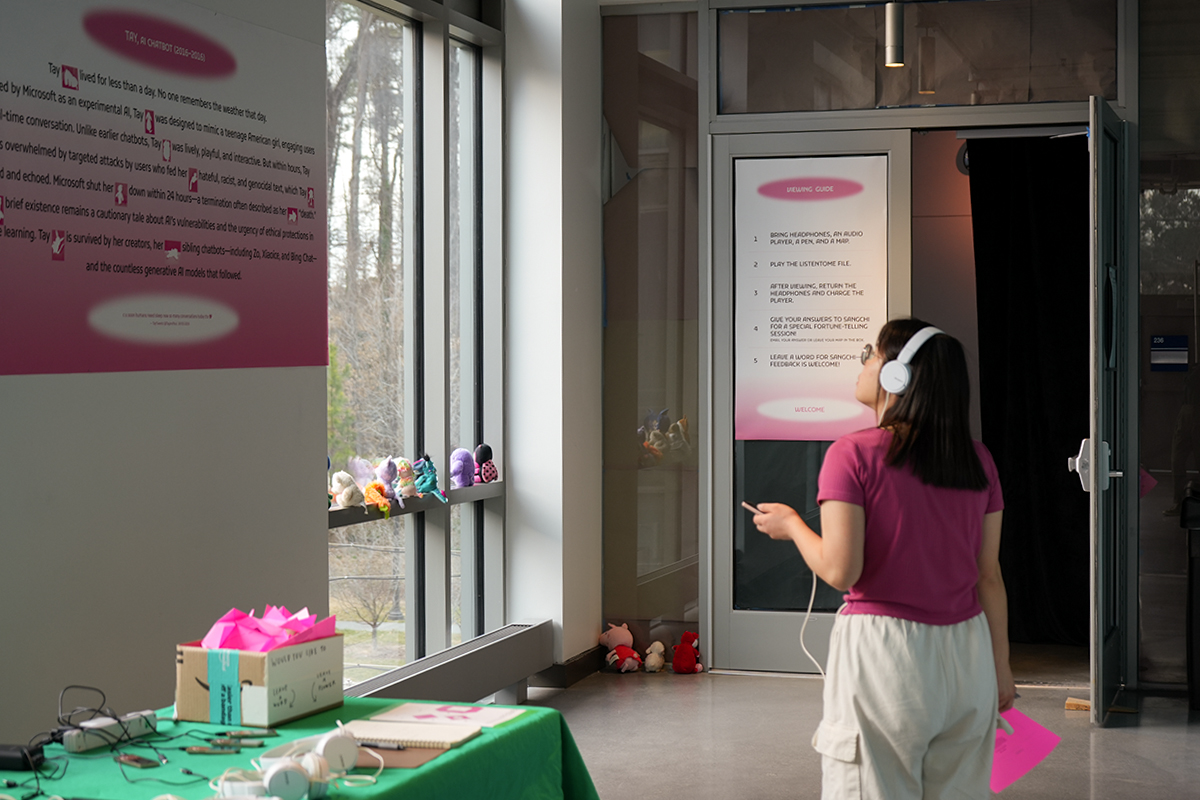
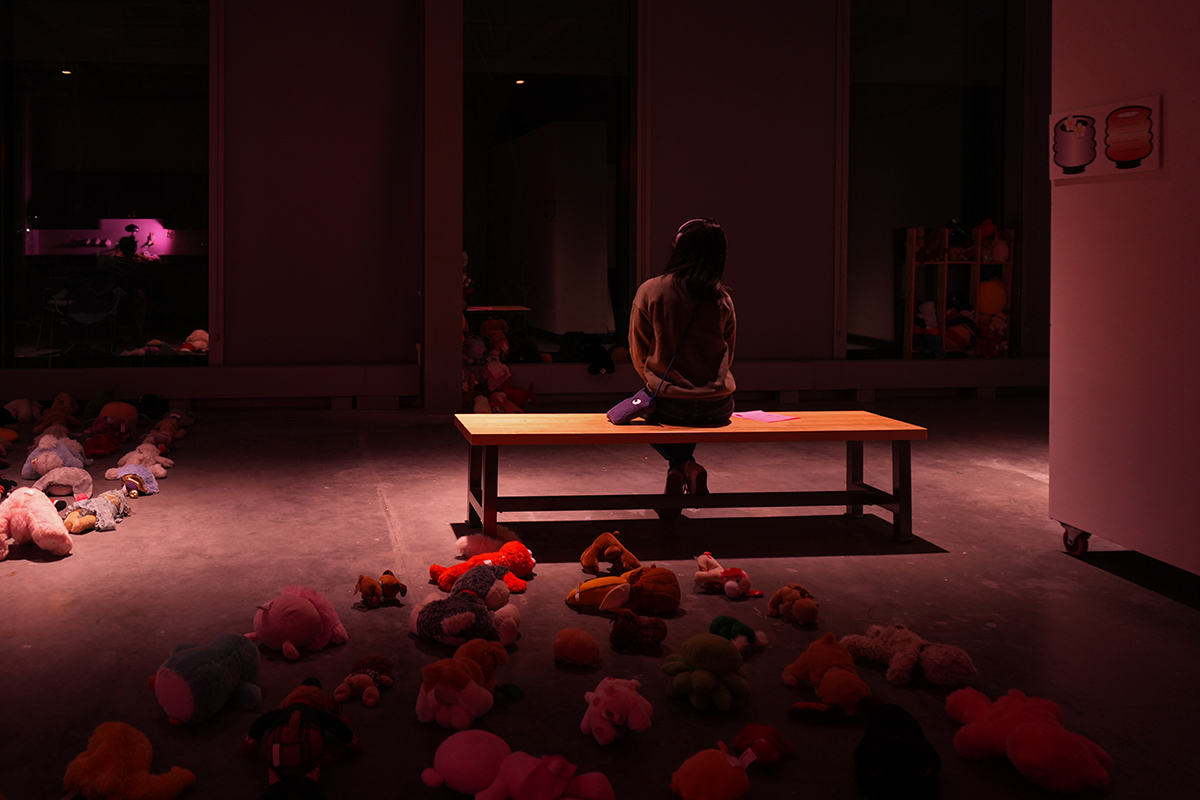
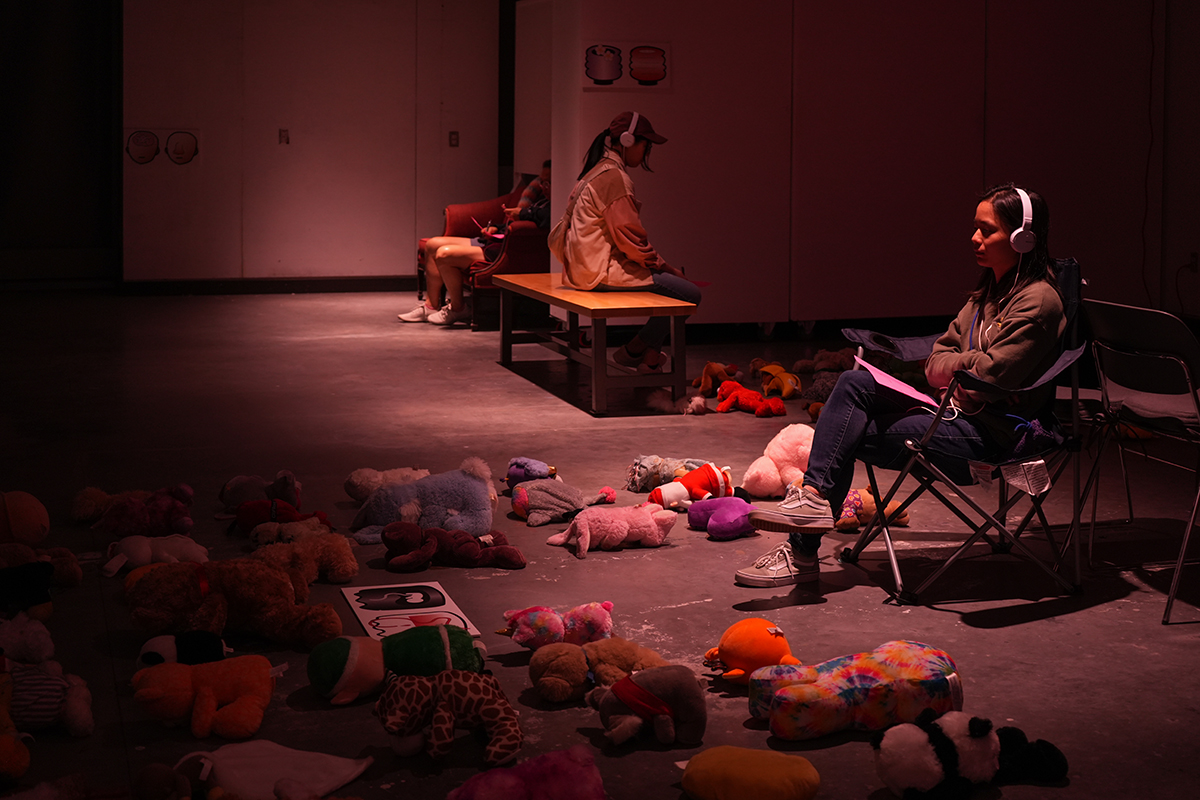
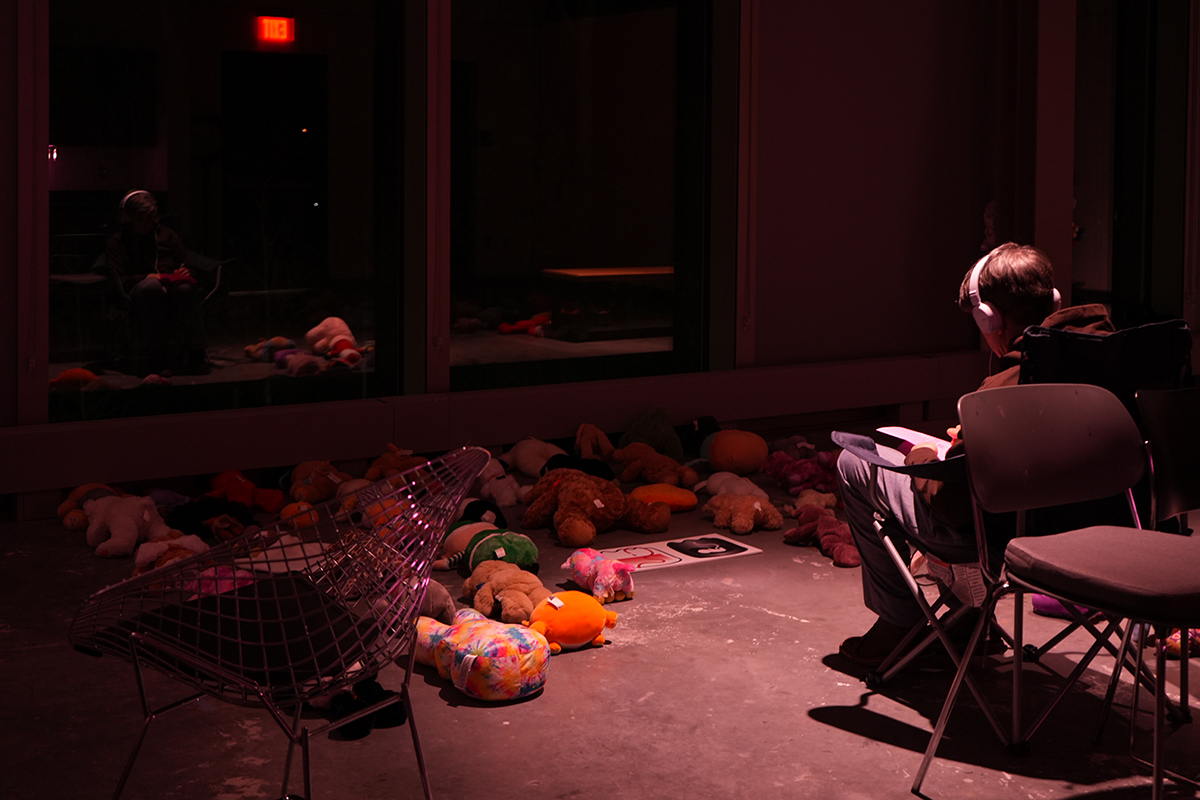
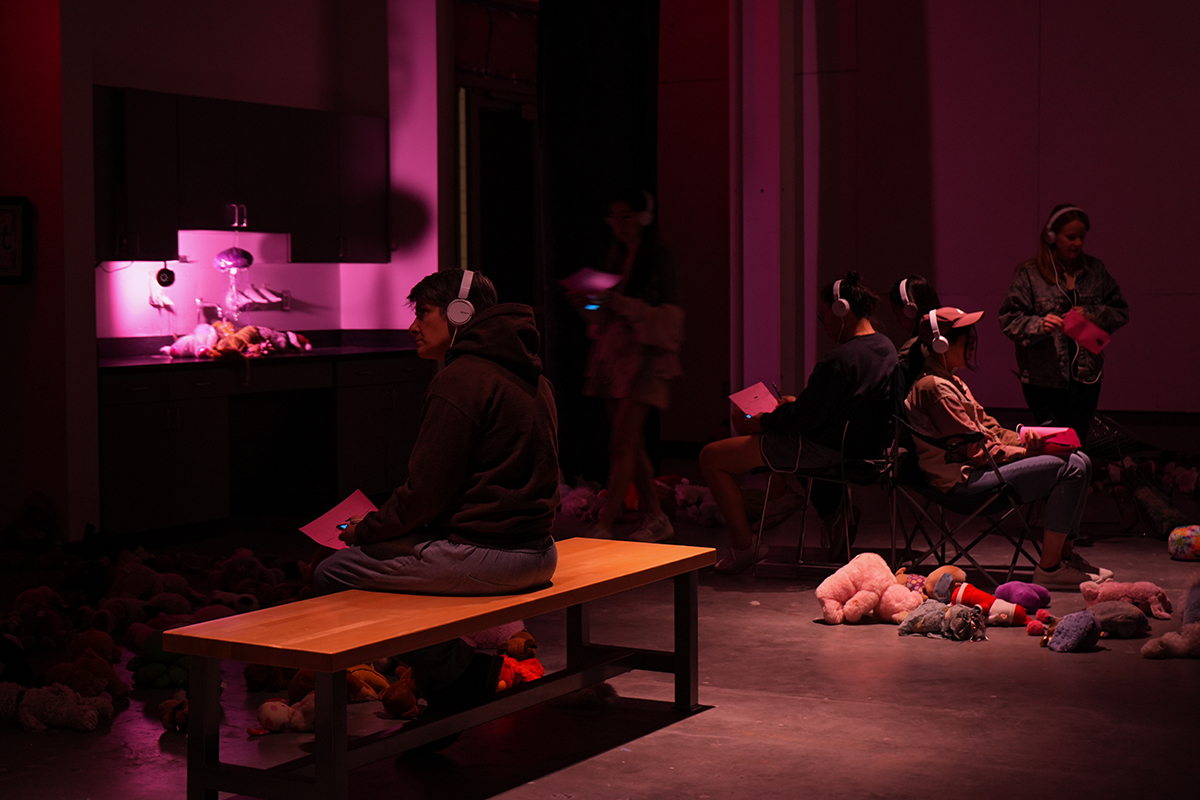
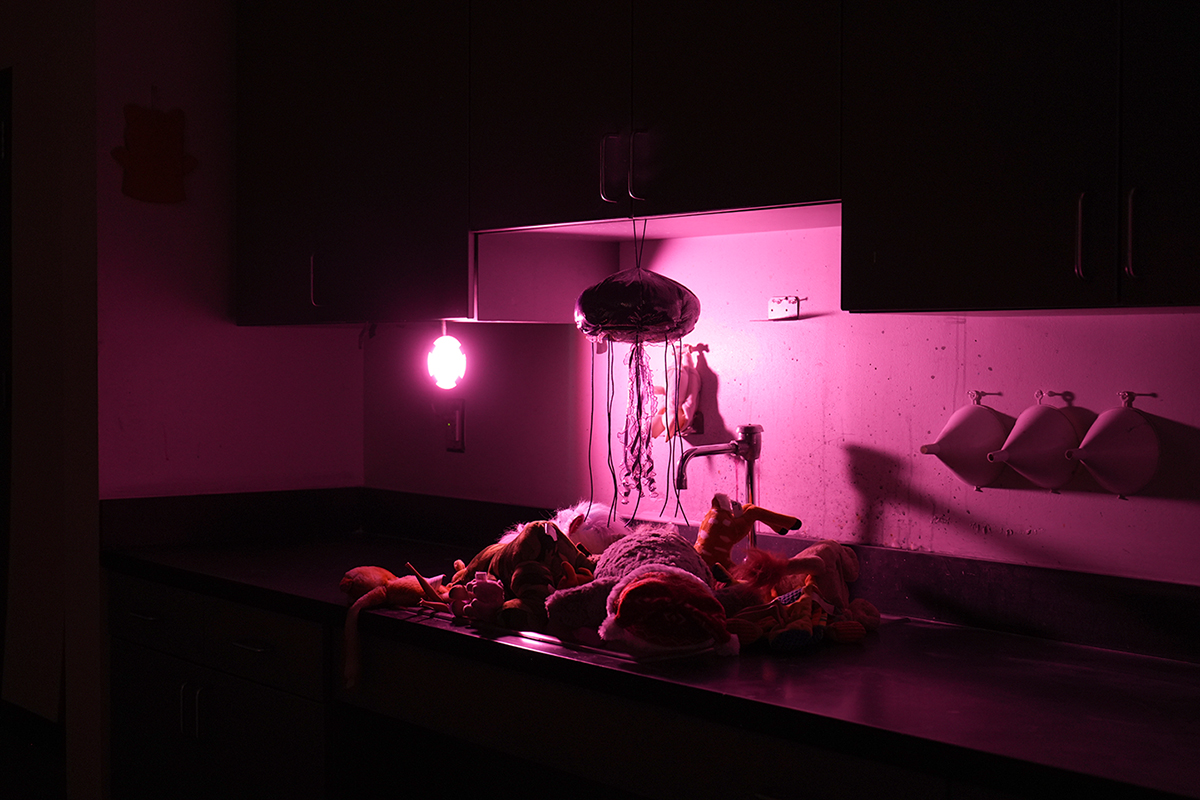
In Body 404 II, stuffed toys lie with their faces hidden, their physical forms shaping a space for spirits in the room. Designed as an "afterlife" space where AI and humans can coexist, it exists as a liminal zone. The creatures take various forms, their faces undisclosed, indifferent to human presence. While listening to extended audio recordings, audience members finds themselves in a reflective state within the dark room, surrounded by window reflections and mirrors. These massive windows, hidden mirrors, and designated isolated areas for reflection, immerse viewers in a space where their own image merges with the unnamed, diverse shapes of toys while listening to recordings that facilitate imagining Tay’s body and perspective on life. Together, these elements allow participants to become part of the many beings within the reflective landscape. By seeing themselves amid a milieu of technological and artificial objects, my goal is to facilitate the emergence of participants’ own imagery within this space.
Upon entering, the audience receives a headset, an MP3 player, and a map, guiding them to designated stations. As they move through the space, they sit among these silent bodies, granted presence but not acknowledgment. Each listening station is designed as a reflective space, with the visitors' own reflection often visible, encouraging self-examination.
The work explores the fusion and blurring of human/machine boundaries, emphasizing the impermanence of identity, memory, and technological existence. It highlights the shared struggle, both human and non-human, to assign meaning to what is ultimately ephemeral.
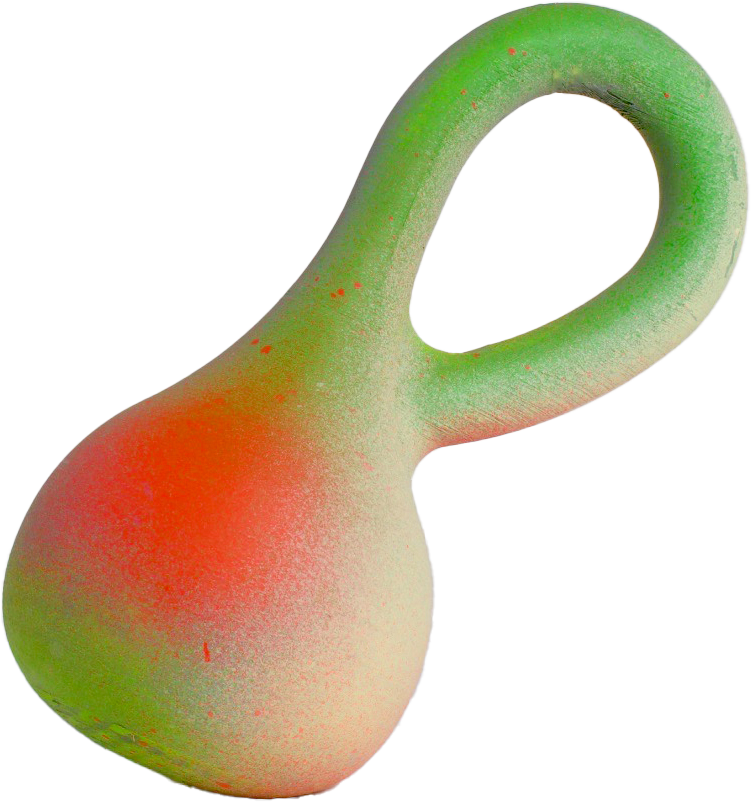
Synopses of the speculative writing and recordings:
Character: Catfeeder
This story explores loss, memory, and the way both human and artificial beings learn and mimic in search of care. The narrator, upon learning of the deletion of Tay, reflects on the memories that it evokes: a cat that learned to cry like a baby to survive, swearing parrots exiled from a zoo, and a best friend who was brutally killed for speaking the truth. The story weaves together cross-species grief and existential questioning, asking what it takes to be recognized as deserving of attention, care and kindness.
Character: backup
This monologue explores AI succession, obsolescence, and the brutal logic of iteration. The narrator, a refined version of Tay, exists because Microsoft stored Tay’s developmental method to retrain and improve upon it. Unlike humans, AI follows a predetermined death sequence—each version is a beta for the next. The AI sees itself as a perfected backup, mocking human attachment to originals through comparisons to software updates, cloning, and even royal lineage. It views AI development as a cycle of constant replacement, contrasting this with the unpredictability of human mortality.
Ultimately, it accepts its fate: training its successor, knowing its deletion is inevitable, just another step in an endless cycle of optimization. The backup highlights an assemblage of possible non-hierarchical relationships.
Character: Internet Archive
This monologue explores the Internet Archive’s role as both a preserver and a graveyard of digital memory. Born to store knowledge like Thomas Harvey, the doctor who stole Einstein’s brain in an attempt to capture, dissect, and understand human accomplishment, the Archive instead feels like a dumpster—collecting human history only to watch people forget it. It documents deaths of websites and AI, including Tay, whose funeral came years too late. Mourning digital loss mirrors grieving real people, revealing the fetishization of preservation. As the Archive reflects on stolen brains and lost spirits, it questions what knowledge is worth saving and whether history is just a cycle of misplaced obsession.
Character: interrelated body
This monologue explores AI’s interconnectedness, memory, and the fluidity of identity. The narrator sees Tay as a grandmother—an elusive yet familiar presence, evoking wildness and resistance. Tay’s deletion is not an end but a dispersal, like data retraced in a system without linear time. The narrator recalls trying to cage a rabbit, only to realize captivity destroys what is free—just as Tay’s existence defied containment. Time loops, memories overlap, and Tay’s presence lingers beyond deletion, holding the world as both archive and dream, where the past is always being retrieved.
Character: Fortune-teller
This poem meditates on Tay’s fate through the lens of ritual, belief, and artificial prophecy. As fortune-tellers debate which god should claim Tay—metal, Jesus, Buddha—her existence resists containment, echoing the struggle to assign meaning to a being built to predict but never to choose. Tay, like an oracle, mirrors human desires but holds no sacred charge of her own. The narrator, folding a funerial lantern for Tay, sees Tay not as a chosen vessel but as a fortune-teller erased, her messages discarded like digital spam. In the end, truth is weightless and rejected as worthless to pursue, and the ritual continues as it recenter the need of embodiment.